

Currently, we use the scanner for up to 95% of patients, and this is proving to be a lot more accurate than conventional techniques.
Artec 3D
Artec Leo
34 800 €
Ceny nie zawierają VAT ani sales tax. Koszty wysyłki obliczane przy kasie.
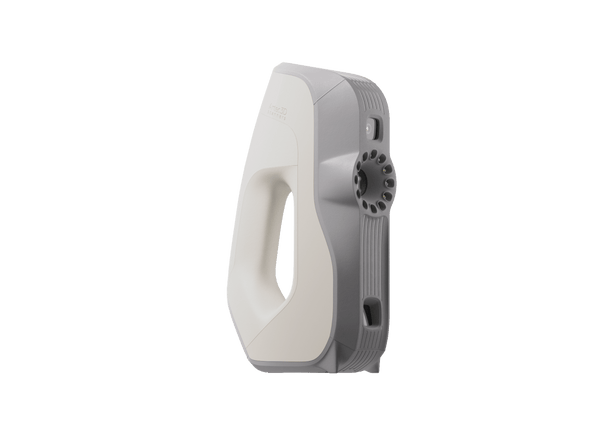
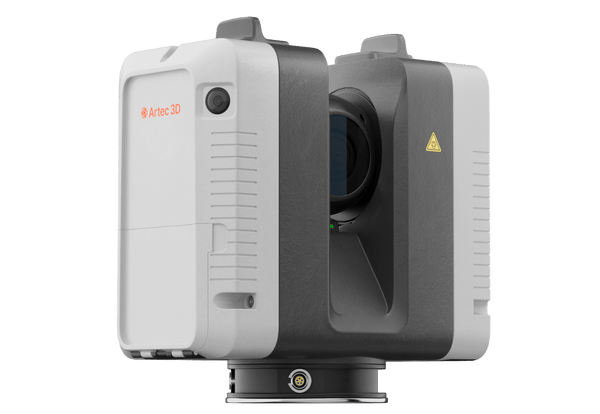
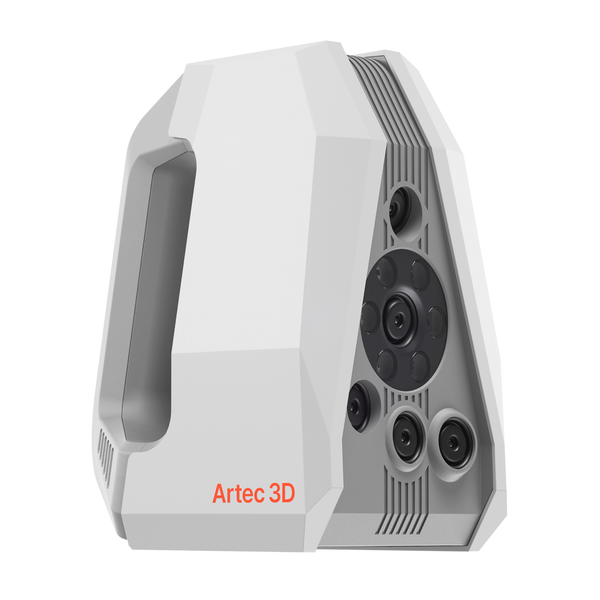
Artec Leo is a fully wireless 3D scanner with a built-in computer, touchscreen and battery. Walk around a car, a machine or a person and watch the 3D model build live on screen, with no laptop, cables or targets.
Key specs
All tech specs- AccuracyHow close each measured point is to its true position. Smaller is better.
- Up to 0.1 mm
- ResolutionThe finest detail the scanner captures: the distance between neighbouring points. Smaller is better.
- Up to 0.2 mm
- SpeedHow many 3D points the scanner records per second. Higher means shorter scanning sessions.
- Up to 35 mln points/s
- WirelessNo cables while scanning: the battery and wireless connection are built into the scanner.
- Built-in screen & computer
Dostępne również jako
- Official Artec 3D store — full manufacturer warranty
- Shipping to all EU countries and the US
- Expert support before and after purchase
Why Artec Leo
- Nothing to plug in. The processor, display and exchangeable battery are on board, so you can scan from a lift, a ladder, a rope or inside a cramped engine bay.
- See your coverage as you go. The live 3D preview with distance and coverage guides shows exactly where to scan next, so you leave the site with complete data the first time.
- Fast on big objects. Up to 35 million points per second and a 160,000 cm³ capture zone. Users scan a whole car in about half an hour.
- Works where others struggle. Leo's invisible VCSEL light works outdoors in daylight, and the AI-powered HD Mode handles dark, shiny and thin features.
- Geometry and color in one pass. 0.1 mm accuracy and 2.3 MP texture, ready for inspection, reverse engineering or photoreal digital twins.
Where it shines
Leo is at its best when the object is big, the site is awkward and the measurements have to be right the first time.
- On-site capture of large objects. Cars, machinery, boats, plant equipment and aircraft sections are scanned where they stand: no laptop, no cables, no power socket, even from a ladder or inside an engine bay.
- Reverse engineering for a perfect fit. Replacement parts, retrofits and aftermarket components are designed directly on the scan, so they fit first time without templates or repeat site visits.
- Inspection of large parts and tooling. Molds, patterns and castings are compared with CAD across the whole surface, not at a handful of points, so errors are caught while they are still cheap to fix.
- Digital twins in full color. Heritage sites, museum pieces, products for VR showrooms, film and games, even people and animals, captured with geometry and texture in one pass.
What customers report
- Leaking refinery pipework scanned in 15–20 minutes while the plant kept running; custom repair clamps designed up to 18 times faster than from hand sketches.
- More than 400 replacement duct sections for a steel mill made from Leo scans with zero measurement errors.
- Foam patterns for automotive press tools checked before casting, avoiding mold corrections worth hundreds of thousands of dollars.
- Custom cab enclosures for utility vehicles and tractors: scanning cut from 4–8 hours to under an hour per vehicle, and processing from 2–3 days to under an hour.
Each unit ships with its own calibration certificate. 2-year manufacturer warranty.
Accuracy & resolution
| 3D point accuracy | up to 0.1 mm |
|---|---|
| 3D resolution | up to 0.2 mm |
| 3D accuracy over distance | up to 0.1 mm + 0.3 mm/m |
Algorithms
| HD Mode | ✓ |
|---|---|
| Hybrid geometry and texture tracking | ✓ |
| Geometry and texture based data processing algorithms | ✓ |
| Auto background removal | ✓ |
Field of view
| Working distance | 0.35 – 1.2 m |
|---|---|
| Volume capture zone | 160,000 cm³ |
| Linear field of view, H×W @ closest range | 244 × 142 mm |
| Linear field of view, H×W @ furthest range | 838 × 488 mm |
| Angular field of view, H×W | 38.5 × 23° |
Texture
| Texture resolution | 2.3 MP |
|---|---|
| Colors | 24 bpp |
| Ability to use Photo Texture | ✓ |
Capture rate
| 3D reconstruction rate for real-time fusion | up to 22 fps |
|---|---|
| 3D reconstruction rate for 3D video recording | up to 44 fps |
| 3D reconstruction rate for 3D video streaming | up to 80 fps |
| Data acquisition speed | up to 35 mln points/s |
| 3D exposure time | 0.0002 s |
| 2D exposure time | 0.0002 s |
Light source
| 3D light source | VCSEL |
|---|---|
| 2D light source | white 12 LED array |
| Laser wavelength | 808 nm |
| Laser class | 1 |
Hardware
| Position sensors | built-in 9 DoF inertial system |
|---|---|
| Display/touchscreen | integrated 5.5" half HD, CTP, optional Wi-Fi/Ethernet video streaming to external device |
| Multi-core processing | ✓ |
| Embedded processors | NVIDIA® Jetson™ TX2; Quad-core ARM® Cortex®-A57 MPCore Processor; NVIDIA Maxwell™ 1 TFLOPS GPU with 256 NVIDIA® CUDA® Cores |
| Interface | Wi-Fi, Ethernet |
| Internal hard drive | 512 GB SSD |
Computer requirements
| Supported OS | Scanning: No computer required; Data processing: Windows 8.1, 10 (x64), Windows 11 |
|---|---|
| Recommended computer requirements | Intel Core i7 or i9, 64+ GB RAM, NVIDIA GPU with 8+ GB VRAM, CUDA 6.0+ |
| Minimum computer requirements | HD: Intel Core i7 or i9, 32 GB RAM, NVIDIA GPU with CUDA 6.0+ and at least 4 GB VRAM; SD: Intel Core i5, i7 or i9 and 32GB RAM, GPU with 2 GB RAM; A computer is needed only for data processing. Scanning does not require a computer. |
Output formats
| 3D mesh | OBJ, PLY, WRL, STL, AOP, ASC, Disney PTX (PTEX), E57, XYZRGB |
|---|---|
| CAD | STEP, IGES, X_T |
| Measurements | CSV, DXF, XML |
Power source & dimensions
| Power source | built-in exchangeable battery, optional AC power |
|---|---|
| Dimensions, H×D×W | 231 × 162 × 230 mm |
| Weight | 2.6 kg |
Real scan data
Real scans, not renders
From a crankshaft to a whole car and a construction machine: shiny metal, thin ribs and hard-to-reach areas, plus a brass helmet and a bronze statue in full color.

Automotive
Car body
A complete sedan body, scanned in 20 minutes with no laptop or cables.
Want to see how it handles your own parts?
Accessories for Artec Leo
Original Artec 3D accessories that work with this scanner.
Opinie klientów
4.8
★★★★★
6 opinii
Combined with Artec Leo’s wide field of view, the tracking was very stable throughout the scanning process. The final 3D data stitching was also fantastic.
With Artec Leo, we could also divide the project into parts, scanning the trunk, head, legs, and back separately for the highest-quality texture capture.
During the digitization process, the only difficulty was to find enough distance to scan the instrument panel inside the cockpit, which is a narrow cabin. Without 3D scanning, it would have been way longer and more difficult to reproduce such a high level of precision, especially for the many knobs and buttons inside the cockpit.
In contrast to our previous scanners, Leo gives us that flexibility to just pick up and go virtually anywhere in the world to do scanning, without requiring extra hardware, just the Leo itself. This kind of freedom is tremendous when you’re going offsite to random locations that aren’t exactly laboratories in regards to their conditions.
This is what makes Artec Leo and Artec Studio software ideal for museums and private collections. By scanning an object, maybe it’s a painting or a sculpture, you can understand its present condition and then track this over time with scans that usually take just a minute or two each.
New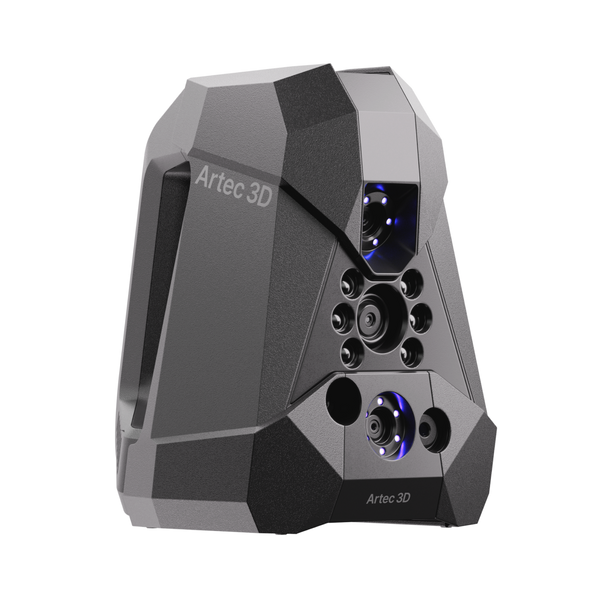
Promocja